
Spring 2026 Newsletter

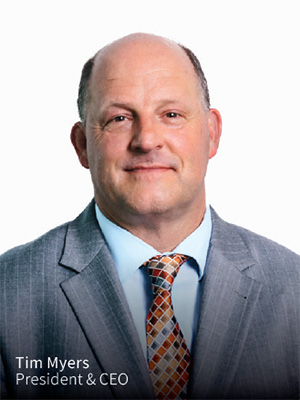
I’m pleased to welcome you to the Spring 2026 edition of Insights & Perspectives. This issue reflects what community banking does best—helping our clients and communities navigate change with clarity, confidence, and trusted guidance.
In this edition, we’re proud to share a timely Washington update from Brian Gardner, Chief Washington Policy Strategist at Stifel. His analysis offers valuable perspective on the evolving regulatory, economic, and technology landscape shaping the banking industry and the broader economy—insight that helps inform how we continue to serve you today and plan for the future.
We also feature insights from Kevin Colombo, Executive Vice President at Colliers, who explores the rapid rebound of the Bay Area office market. His piece highlights how the accelerating adoption of artificial intelligence, renewed venture capital investment, and a broader return-to-office trend are driving demand and reshaping the commercial real estate landscape. While challenges remain, Colombo underscores a clear shift in momentum—pointing to growing leasing activity, rising investor confidence, and a renewed sense of optimism across the region.
You’ll also find a client spotlight on Cartelligent, a Sausalito‑based business that has reimagined the car‑buying experience by putting relationships over transactions. Their story highlights the power of personalized service, long‑term thinking, and fostering culture—values that strongly align with our own.
Finally, as fraud schemes continue to grow more sophisticated, we encourage you to visit the Fraud Prevention Resource Center on the Bank of Marin website. The hub offers practical tools, timely alerts, and education designed to help you safeguard your accounts and personal information.
Thank you for trusting Bank of Marin as your financial partner. We are honored to support you and look forward to continuing the conversation.

Tim Myers
President & CEO
Bank of Marin
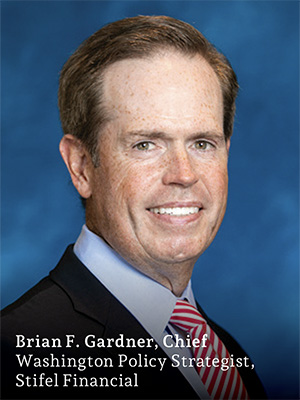
Over the past 18 months, fiscal policy in Washington, D.C. has reflected a continual tension between policies that promote economic growth and populist impulses. The latter, in the form of tariffs and immigration policy, combined with the ongoing conflict in Iran and lengthy government shutdowns have created headwinds for the economy.
Despite these challenges, however, the Trump administration’s pro-growth, deregulatory framework has produced tailwinds for the economy that have overcome these significant challenges.
A central pillar of fiscal policy in Washington has been the effort to stimulate investment and economic expansion through regulatory relief. In the banking sector, this has meant a renewed push to right-size financial regulations that were implemented in the wake of the Great Financial Crisis. The administration has supported reducing capital requirements and easing compliance burdens on financial institutions, arguing that such changes free up lending capacity and support economic growth.
Regulators at the Securities and Exchange Commission and the bank regulatory agencies are in the process of implementing several steps which support the administration’s goals. Proposals by the banking regulators to implement the Basel III capital rules attempt to improve risk-sensitivity and eliminate duplicative rules which could free up lending by banks, particularly for residential mortgages. In addition, the banking regulators and the SEC are focusing their attention on material financial risks.
By placing less emphasis on process and procedural defects, the regulators are attempting to build a framework in which banks are freer to lend while also promoting financial stability by focusing on actual risks to a lender’s financial health.
The Trump administration has extended this deregulatory philosophy beyond traditional finance into digital finance and financial technology. Executive actions have sought to promote blockchain innovation and support dollar-backed stablecoins (the GENIUS Act). These policies reflect the administration’s preference for market-driven financial innovation over government-led approaches. From a fiscal perspective, such moves aim to reinforce the global dominance of the U.S. dollar while encouraging private investment in emerging financial infrastructure.

At the same time, Washington has faced mounting pressure to address the rapid rise of artificial intelligence (“AI”). Rather than imposing strict regulatory controls, the Trump administration has pursued a relatively light-touch, innovation-first approach. The 2026 National Policy Framework for Artificial Intelligence, issued in March 2026, emphasizes federal preemption of state laws, with the goal of creating a unified national standard that reduces regulatory fragmentation. This approach is designed to enhance U.S. competitiveness, particularly in relation to China, and to provide clarity for firms investing heavily in AI development.
However, several pillars of the framework need congressional approval which seems unlikely in the current political environment. In the absence of federal legislation, some states have enacted their own AI regulations, reflecting concerns about privacy, labor displacement, and consumer protection. The resulting tension underscores a recurring theme in Washington fiscal policy: the trade-off between innovation and economic growth on one hand and voters’ anxiety over privacy and job security on the other.
This tension is particularly evident in the regulation of data centers, which are critical pillars for AI infrastructure. The Trump administration has moved to accelerate data center construction by streamlining permitting and environmental reviews, framing these projects as essential to economic growth and national security. State and local governments, however, have pushed back.
Several state and local governments have considered legislation to regulate energy usage, water consumption, and community impact. In some cases, proposals have even called for temporary moratoriums on new data center construction due to concerns about electricity demand and environmental strain. The success rate of these initiatives has been limited, but more localities are expected to consider limits on data centers in the future.
Data centers present both economic opportunities and challenges. On one hand, they attract private investment, create jobs, and expand the tax base. However, they also impose substantial costs on energy infrastructure and local communities. In the wake of U.S. attacks on Iran, voters have become increasing anxious about energy prices which could translate into additional political pressure to protect the public from price hikes associated with data centers. The Trump administration proposed the “Ratepayer Protection Pledge” which is a voluntary program in which data center operators to fund their own power generation and infrastructure, effectively shifting costs from taxpayers to private developers. While this initiative is voluntary, legislation to enforce these arrangements might gain traction in the coming months.
 Brian F. Gardner
Chief Washington Policy Strategist
Stifel Financial
(202) 756-7764
[email protected]
Stifel.com
The views expressed in this article are solely those of the author and do not represent the opinions of any other individual or organization. This is not financial advice; please consult with qualified financial professionals for any such matters.
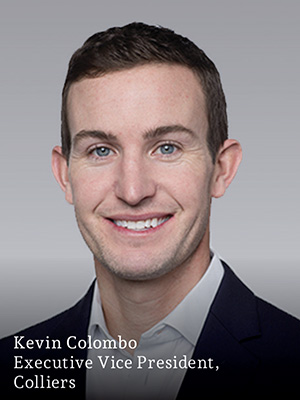
History tends to repeat itself in the Bay Area Office Market — both positively and negatively. As quickly as we fell from 2020 to 2024, we are just as quickly rebounding into another up cycle. Like the recovery from the dot com crash, and the great financial crisis, we are off and running yet again.
This time, fueled by the nationwide return to office trend, a cleaner and safer San Francisco, and the unfathomable momentum of artificial intelligence (“AI”). What makes this market unique is that it tends to move before the rest of the country, particularly when innovation cycles and venture capital align.
THE AI ECONOMY IS RESHAPING THE MARKET
If you want to go into finance, you move to New York. If you want to get into music, you move to Nashville. If you want to get into entertainment, you move to Los Angeles. If you want to get into AI … you better be in the Bay Area.
If 2023 represented the bottom of the market cycle, then 2024 was the rebalancing year, and 2025 clearly marked the beginning of the recovery phase. Now that we are halfway into 2026, we are moving at an office recovery pace that has never been seen.
The biggest catalyst has unquestionably been AI.
San Francisco-based AI companies accounted for almost 70% of global AI venture capital investment in 2026 year to date, with OpenAI and Anthropic alone driving more than $140 billion of funding activity.
That capital is directly translating into office demand. OpenAI and Anthropic alone have leased more than 2 million square feet of space in San Francisco, with more than 1 million of that coming in the past 12 months. AI companies are projected to account for more than four million square feet of leasing volume this year — likely over 35% of all leasing activity in San Francisco.
What’s particularly notable is that this leasing activity is occurring across virtually every deal size category. Since 2023, leasing velocity has increased materially in both smaller start up requirements and large-block institutional leases. In fact, almost 50% of the leasing transactions in 2026 have been greater than 50,000 square feet.
We will likely look back at the 2025–2029 period as the “Roaring 20s,” with companies like Anthropic, OpenAI, Nvidia, and Perplexity—along with many others—leading the charge.
Today, AI, robotics, crypto, and advanced computing companies are driving the wave of expansion.
The total addressable market (TAM) for these companies is not yet known. What differentiates this cycle from the last is the scale of revenue already being generated—it’s real and growing quickly. There is a credible case that the TAM could exceed a trillion dollars. Based on this trajectory, it’s not unfathomable that companies like Anthropic, OpenAI, and X (including SpaceX, xAI, X, and Tesla) could become substantially larger than today’s incumbents, including Google, Microsoft, Amazon, and Apple. If that occurs, and the majority of these companies are based right here in the Bay Area, the recovery could accelerate substantially.
RISING COSTS, RISING DEMAND, RISING RENTS
One of the largest overhangs on the market over the past several years has been the unprecedented amount of sublease space that flooded San Francisco during and after the pandemic.
With rising construction costs, tenants have been targeting prebuilt space.That has led sublease availability to decline from nearly 10 million square feet at its peak in 2023 to approximately four million square feet today. Meanwhile, active tenant demand has climbed back to eight million square feet (in line with pre-pandemic levels) and continues to rise.
As quality sublease inventory disappears, tenants are increasingly shifting back toward direct leases and searching for turnkey speculative suites being offered by landlords. Average tenant improvement project costs have continued to rise, landlords are investing an incredible amount of capital in amenities as the “hospitality” shift of the office continues, forcing them to increase rates to justify the capital investment.
There will not be another Class A office tower delivered in San Francisco prior to 2031. With no new supply, increased demand, and back-to-back record years of leasing activity, we will likely see office rents grow at an annual rate north of 10%. These metrics, along with the return of the debt markets, have boosted investor confidence in the greater San Francisco office market. Transaction volume and average price per square foot continue to rise as more out‑of‑town investors take notice of activity in the city.
THE RISING TIDE – THE BAY AREA CRE MARKET
Over the past five months, momentum in San Francisco and Silicon Valley has begun positively influencing sentiment and activity across the broader Bay Area market. The resurgence of AI-driven leasing demand, improving return-to-office trends, and renewed venture capital investment have created a ripple effect throughout the region, helping stabilize markets that had largely been in wait-and-see mode throughout the past several years.
The biggest beneficiary from the office recovery in San Francisco is the apartment market. Demand for apartments in San Francisco have rebounded aggressively over the past 12 months. Since mid-2025, the market has seen 13% rent growth, average cap rate compression from 5.5% to 4.5%, and a massive increase in velocity to lease vacant units. Just over twelve months ago, the average vacancy period for a residential unit in San Francisco was over 30 days. Today, the average downtime is 7 days, and it is common to see 10-15 applicants for well located, quality units.
The Marin County office market is starting to see signs of improvement as well. With vacancies up, rates down, and demand in question, 2023 and 2024 saw values decline and a glut of buildings hit the market for sale. During that period, there were limited transactions as ownership expectations had not yet been adjusted to the new market reality. Average price per square foot has gone from $390/ft in 2023 (18 transaction), to $370//ft in 2024 (22 transactions), all the way down to $290/ft over the past 12 months (37 transactions) as buyers have regained confidence and found the bottom.
Much like San Francisco, the Contra Costa apartment market is seeing signs of a rebound as well. Over the past 12 months, deal volume is up 19% (90 transactions) along with price per unit seeing a 9% increase ($247k/unit) compared to the year prior. As job growth continues throughout San Francisco and the greater Bay Area, the East Bay, and areas near BART, will remain strong.
LOOKING AHEAD
The Bay Area office market is still working through challenges. Vacancy remains elevated in older assets, financing conditions remain more difficult than prior cycles, and the recovery will continue to be uneven across submarkets and building quality.
However, the overall tone of the market has materially changed over the last 12 months.
Momentum is real.
Leasing activity is accelerating. Tenant demand is growing. Venture capital is flowing again. Trophy assets are tightening. And for the first time since the pandemic, San Francisco feels like it has regained forward momentum.
As always, success in this market requires more than simply reacting to headlines. It requires strategic planning, informed decision-making, and a clear understanding of how rapidly the landscape continues to evolve.
 Kevin Colombo
Executive Vice President
Colliers
[email protected]
(415) 385-6792
The views expressed in this article are solely those of the author and do not represent the opinions of any other individual or organization. This is not financial or real estate advice; please consult with qualified professionals for any such matters.

David traces the roots of that vision back to his college years and what he still considers his perfect first summer job at a major car rental company based in San Rafael.
“What I learned early on was how powerful building a strong culture and fostering relationships can be,” David recalls. “If you take care of your customers and your employees, the rest will follow. It’s an inspiring model—and one I’ve tried to live by every day since.”
The following summer, David worked at a car dealership—an experience that proved equally formative, though for very different reasons.
“With little training and a lot of ego, salespeople were competing for everything,” he says. “I’d sit in on test drives and listen closely to what customers were actually looking for, but that insight often got lost in the process. I love cars but hated the experience of buying them. That’s when I realized I wanted to make it less stressful, more enjoyable, and ultimately more cost‑effective for people.”
That realization became Cartelligent, now a thriving business with a team of 35 employees that has helped deliver more than 50,000 vehicles throughout California. As the company grew, so did its operational needs, prompting David to seek a banking partner that understood his business and shared his relationship‑driven values.
That connection came naturally when Bank of Marin opened a nearby branch in Sausalito.
“For making deposits and handling in‑person transactions, we needed a more convenient connection to a branch,” David says. “It felt serendipitous when Bank of Marin opened across the street. From the start, it was a great fit.”
That relationship was put to the test during the COVID‑19 pandemic.
“COVID was a true test and Bank of Marin showed up for us,” David shares. “We needed more working capital to keep up with the increased demand we experienced during that period. What made the difference was that they took the time to truly understand our business and our needs, and the needs of our clients, which helped us achieve significant growth in that uncertain time.”
Today, David values the open, two‑way communication he has with his Bank of Marin team—relationships that go well beyond transactions.
“Many of our bankers have become clients and friends,” he says. “You just can’t build that level of trust with larger banks, and we genuinely appreciate the personalized service Bank of Marin provides.”
With a strong foundation and trusted partners in place, Cartelligent continues to grow, guided by one of its core values to “build relationships over transactions.” The company now facilitates an average of 200 to 300 vehicle purchases each month, serving clients throughout the state—many of whom proudly display Cartelligent license plate holders and refer friends and family.
At the heart of Cartelligent’s success is its mantra: “premium service without a premium price.” For a flat fee, customers receive end-to‑end support beginning with a free consultation with an expert auto advisor. Cartelligent coordinates test drives, sources vehicles anywhere in California—or places special orders as needed—and negotiates purchase or lease terms. The team also assists with trade‑ins and financing options.
Once the vehicle is secured, Cartelligent’s delivery specialists meet clients at one of four delivery centers statewide—or at their home—to finalize paperwork and personalize the vehicle. From pairing phones to adjusting seats, every detail is handled so customers can drive away informed, confident, and comfortable.

 David Shapiro
Founder and CEO
415-331-4270
[email protected]
Cartelligent.com