
Fall / Winter 2026 Newsletter


It’s hard to believe it has already been a year since we launched Insights & Perspectives.
Over the past year, we’ve been fortunate to feature guest contributors who have generously shared their expertise and perspectives with us. We’re grateful for their contributions and for the opportunity to continue creating a forum for thoughtful conversations about the issues shaping our businesses, our communities, and our region.
In this edition, Dr. Sanjay Varshney, founder and principal of Goldenstone Wealth Management, provides an overview of the economy and financial markets, examining the forces shaping the current environment, from interest rates and inflation to corporate earnings and the growing influence of artificial intelligence.
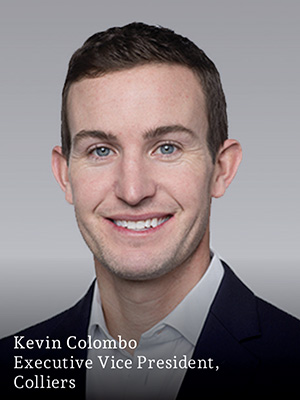
Kevin Colombo, executive vice president at Colliers, returns with an update on the Bay Area office market. He explores the resurgence taking shape in San Francisco, fueled in part by artificial intelligence and venture capital activity, as well as the more measured but encouraging recovery underway in Marin County.
We’re also proud to spotlight our client Sunski, a San Francisco-based eyewear company founded by Tom Stewart and Michael Charley. Their journey reflects the value of finding partners who understand your business, adapt to its unique needs, and share your commitment to making a positive impact.
As we mark this first anniversary, thank you for reading, engaging with the ideas we share, and, most importantly, for trusting Bank of Marin as your financial partner. We look forward to continuing to bring you perspectives that inform, inspire and help you navigate what comes next.
Warm regards,

Tim Myers
President & CEO
Bank of Marin

The third quarter combined solid economic fundamentals and strong corporate earnings with renewed pressure from oil prices, inflation, and interest rates.
Oil rebounded above $100 per barrel, Treasury yields climbed, and the Federal Reserve raised interest rates in September. Despite these headwinds, the S&P 500 reached a new all-time high, supported by resilient economic activity, corporate profitability, and continued enthusiasm for artificial intelligence (AI).
However, market leadership narrowed, with smaller companies and interest-rate-sensitive sectors lagging behind large-cap technology stocks.
OIL VOLATILITY AND INTEREST RATES
Oil remained a significant influence on financial markets throughout the quarter. After declining in May and June, prices rebounded sharply in July, rising approximately 22%. These fluctuations largely reflected uncertainty surrounding Middle East oil supplies and potential disruptions to the Strait of Hormuz.
Changing energy prices affect gasoline, transportation costs, inflation, and ultimately economic growth and monetary policy. As oil prices recovered, concerns about persistent inflation intensified, shifting investor attention from potential Federal Reserve rate cuts toward the possibility of further increases. Rising Treasury yields added pressure to borrowing costs and financial markets.
STRONG EARNINGS AND ECONOMIC FUNDAMENTALS
Despite macroeconomic uncertainty, the underlying economy and corporate sector remained resilient. Consumers continued spending, businesses maintained investment, and unemployment remained low. These trends helped support economic growth despite elevated borrowing costs.
Corporate profitability provided another important source of market support. S&P 500 earnings over the trailing 12 months increased nearly 30%, representing a substantial improvement from the single-digit growth rates recorded in 2023 and 2024. This strength demonstrated that many companies continued to grow profits despite higher financing costs and changing input prices.

STRONG ECONOMY FACES GROWING RISKS
Corporate bonds experienced pressure from rising Treasury yields but generally outperformed government bonds. Investment-grade and high-yield credit spreads remained relatively stable and historically tight for much of the quarter, indicating that credit conditions were broadly supportive even as borrowing costs increased.
ARTIFICIAL INTELLIGENCE: A GROWING MARKET DRIVER
AI continues to influence economic growth, corporate investment, and financial market performance. Spending on AI-related infrastructure, including data centers, computing equipment, and related technology, has grown substantially from approximately $180 billion at the end of 2023 to a projected $1 trillion-plus by 2027.
This investment has become an important contributor to business spending and has supported large technology companies and major equity indices. Companies are also increasingly using bond markets to finance infrastructure expansion. As the investment cycle matures, investors will increasingly evaluate whether spending translates into sustainable revenue growth, stronger profits, and measurable productivity gains.
NEAR-TERM OUTLOOK: NEXT THREE MONTHS
Our near-term outlook has become more cautious. Although the S&P 500 remains near record highs, market breadth has weakened, financial conditions have tightened, and investor risk appetite has softened. Higher Treasury yields and signs of stress in lower-quality credit add to the challenges.
Large-cap technology stocks and AI demand may continue supporting headline indices, but underlying market weakness suggests greater vulnerability to negative surprises. Uncertainty surrounding inflation, energy prices, and Federal Reserve policy could contribute to additional volatility.
These conditions do not guarantee an immediate market decline. However, the combination of elevated borrowing costs, narrower market leadership, and tightening financial conditions increases the potential for downside risk over the next three months.
LONG-TERM OUTLOOK: NEXT 12 MONTHS
The longer-term outlook remains dependent on economic resilience and continued corporate earnings growth. The consensus continues to anticipate a soft landing, reflecting the economy’s ability to withstand significant uncertainty and energy-market disruption. Unlike earlier periods when expectations for lower interest rates helped drive equity markets, the current outlook relies increasingly on earnings growth, particularly from AI-related investment. Nevertheless, elevated valuations, geopolitical tensions, persistent inflation risks, and rising Treasury yields could challenge market performance.
Over the next 12 months, the key questions are whether corporate earnings can meet expectations and whether inflation, energy prices, and interest rates remain manageable.
WHAT TO WATCH IN THE FOURTH QUARTER
The coming quarter will provide important evidence about the economy’s durability. Consumer spending, employment, business investment, and third-quarter earnings reports will help determine whether economic momentum can withstand higher borrowing costs and persistent inflation pressures.
AI investment will remain a central theme, with increasing attention on the returns generated by infrastructure spending. At the same time, oil prices, Treasury yields, credit conditions, and Federal Reserve policy will remain important market drivers.
INVESTMENT PERSPECTIVE
Markets have demonstrated resilience, supported by economic growth and strong corporate earnings, but risks have increased beneath the surface. It is important to monitor these developments while emphasizing diversification, investment discipline, and a long-term perspective. Maintaining a portfolio aligned with individual financial goals remains essential across a range of potential market outcomes.
 |
Dr. Sanjay Varshney Founder & Principal Goldenstone Wealth Management (916) 799-6527 [email protected] goldenstonewealth.com |
The views expressed in this article are solely those of the author and do not represent the opinions of any other individual or organization. This is not financial advice; please consult with qualified professionals for any such matters.
San Francisco’s resurgence is creating opportunities well beyond the office market.
Over the past several years, the San Francisco office market has experienced one of the most dramatic downturns in its history. Following the pandemic, record vacancy, declining rents, and significant reductions in property values created an environment few could have anticipated. However, as we’ve discussed in previous newsletters, San Francisco has a long history of reinventing itself, and the latest recovery is turning into a growth cycle that we have never seen.
As we enter the final quarter of 2026, the data is becoming difficult to ignore. Leasing activity is accelerating, vacancy is declining, rents are rising, and perhaps most importantly, the technology and venture capital ecosystem that has historically powered the Bay Area economy is once again driving substantial demand for office space. This is starting to reverberate throughout the greater Bay Area.
SAN FRANCISCO’S RECOVERY IS GAINING MOMENTUM
Through the first three quarters of 2026, San Francisco recorded approximately 12.5 million square feet of leasing activity, putting the market on pace for its strongest year in history. Vacancy is approaching 26%, down from 31.1% a year ago (and over 33% in 2024), while year-to-date net absorption has exceeded 2.6 million square feet. 2025 marked the return of the “big deal”, and 2026 is pushing to all-time highs. After 9 new “big deals” in 2024, a jump to 22 in 2025, we are now on pace for more than 32 new transactions greater than 50,000 square feet here in 2026.
These numbers represent a meaningful reversal from the negative absorption and rising vacancy that characterized the market from 2020 through 2024.
The primary catalyst continues to be artificial intelligence. In 2022, AI companies occupied less than 1% of San Francisco’s office inventory. Today, they account for more than 8% of the market, and OpenAI and Anthropic are now the second and third largest non-government occupiers in San Francisco behind Google. Based on the leasing momentum we are currently seeing, we expect AI to account for more than 10% of the San Francisco office market by the end of 2026.
What makes this cycle particularly interesting is the concentration of venture capital and what that means for hiring. Year to date, San Francisco companies have accounted for almost half of the venture funding globally. While venture funding doesn’t immediately translate into office leasing, historically it has been one of the strongest leading indicators of future employment and real estate demand. In looking at largest 25 new tech/AI office leases over the past 18 months, those companies have a capacity for 14,000 employees (based on those lease commitments). Collectively, those companies employ roughly 6,000 people in San Francisco today, leaving capacity and future hiring in the neighborhood of 8,000 people.
THE MARKET IS TIGHTER THAN VACANCY SUGGESTS
One of the more interesting dynamics today is the disconnect between headline vacancy and the actual availability of desirable office space.
Although overall vacancy remains elevated, much of the available inventory consists of older buildings requiring significant capital investment. Our research indicates that only 9.8% of available space is Class A, built out, and ready for immediate occupancy, representing just 2.8% of total office inventory.
Meanwhile, active tenant demand exceeds 8 million square feet, and sublease inventory has fallen below 4 million square feet.
Compounding this imbalance are construction costs, which have increased dramatically. To do a tenant improvement project from shell to occupancy (hard costs, soft costs, FF&E, wiring, etc.), averages are now approaching $500 per square foot, making existing high-quality, furnished space increasingly attractive.
As a result, asking rents have increased more than 12% year over year, with certain neighborhoods, including SOMA, experiencing even stronger growth.
The takeaway is straightforward: while opportunities remain for tenants, the window to secure the best space at historically discounted economics is narrowing. With the flood of venture capital and tenant demand, we expect this trend to continue for the next couple of years.
MARIN COUNT Y: A STEADY AND ENCOURAGING RECOVERY
Marin County is also experiencing improving office market fundamentals, although its recovery has been more measured than San Francisco’s technology-driven resurgence.
During the third quarter, Marin recorded approximately 60,000 square feet of positive net absorption, marking five consecutive quarters of positive demand. Vacancy declined to 18.3%, while average asking rents increased to $3.62 per square foot per month, up 4.3% from year-end 2025. This is leading to investor confidence, as sales volume for office buildings in Marin exceeded $45M in Q3, seeing groups like Basin Street Properties jump back into the San Rafael office market picking up two 55,000 square foot office buildings for less than $170 per foot.
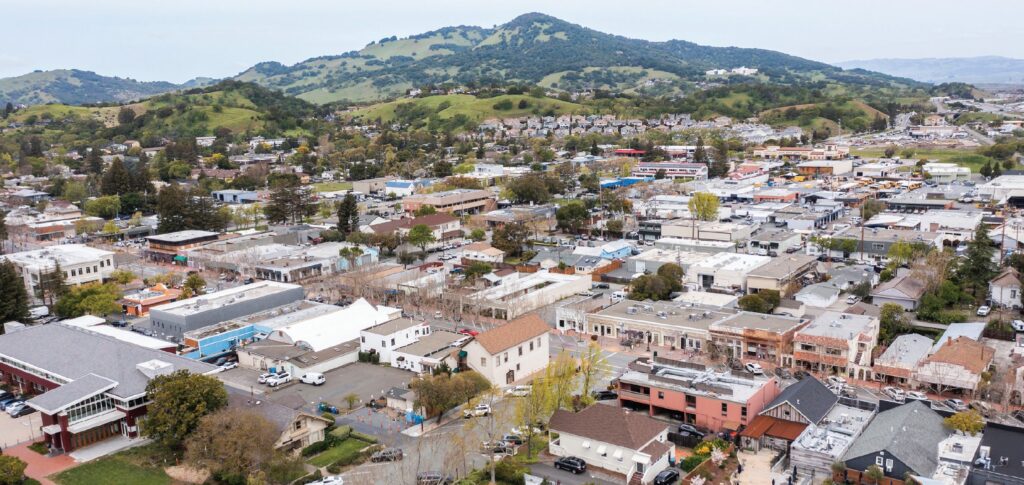
Healthcare has emerged as an important source of demand, accounting for approximately 43% of active tenant requirements. A notable example was Marin Community Clinics’ 47,653-square-foot lease in Northern San Rafael, absorbing a building that had been vacant since 2022.
Marin is also experiencing its own flight to quality. Well-located, improved Class A properties in Southern and Central Marin are commanding premium rents, while older buildings continue to compete through aggressive pricing and concessions.
Although office employment remains below pre-pandemic levels and new head winds with rising interest rates have become a concern, positive absorption and renewed investment activity suggest that the market is gradually finding its footing.
LOOKING AHEAD: OPPORTUNITY IN A CHANGING MARKET
Looking toward 2027, I remain optimistic about the direction of the Bay Area market. Office is the tip of the spear, and as we see job growth, we see residential demand, retail demand, and ecommerce and data center demand in industrial. San Francisco’s innovation economy, now turbo charged by AI, is demonstrating remarkable resilience, and the combination of expanding technology companies, no new construction until 2031, and improving investor confidence, creates a compelling foundation for continued recovery.
That said, this will not be a uniform recovery. Building quality, location, financial stability, and the ability to deliver move-in-ready space will increasingly determine which properties outperform.
For businesses to evaluate their real estate needs, the next 12 to 24 months will be particularly important. The market still offers meaningful opportunities, but as we’ve seen in previous cycles, the balance of negotiating leverage can change faster than most anticipate.
 Kevin Colombo
Executive Vice President
Colliers
[email protected]
(415) 385-6792
The views expressed in this article are solely those of the author and do not represent the opinions of any other individual or organization. This is not financial or real estate advice; please consult with qualified professionals for any such matters.
When Tom Stewart and Michael Charley graduated from Columbia University in 2009, their entrepreneurial ambitions collided with the realities of a recession. They knew they wanted to build a business together and simply needed the right idea.
Their first venture, Salsabol—an innovative kitchenware product designed to solve the problem of messy chips and dip, gave the duo valuable experience and taught them important lessons about running a business. But they were still searching for an idea that reflected their shared passion for the outdoors.
“The Salsabol was a great story that helped us survive a down market and learn how to run a business, but it lacked the connection to the outdoors that we are so passionate about,” said Michael.
When the pair began looking for more sustainable eyewear for their outdoor adventures and sports performance needs, they saw more than a gap in the market; they saw the business opportunity they had been looking for. In 2012, Tom and Michael launched Sunski, a San Francisco-based eyewear company.
As Sunski grew, so did the complexity of its financial needs. The founders wanted more than a bank; they wanted a financial partner that understood the nuances of their business and industry, could help them navigate their day-to-day needs, and grow alongside them. They found that at Bank of Marin through their relationship with Walnut Creek Commercial Banking Office Relationship Officer Louis Wong. “After experiencing what it’s like being a small fish in a huge pond at bigger financial institutions, we were craving a community bank with personalized service; we’ve found that and much more at Bank of Marin. We have a trusted partnership with Louis. He truly understands our business and offers strategic financial advice that helps our day-to-day operations run smoothly.”
That understanding of Sunski’s business is especially valuable in navigating the seasonal nature of the industry. Sunski experiences the greatest demand during the summer, which requires the company to build inventory at certain times of the year, manage changing sourcing costs, and bridge the timing between expenses and incoming receivables.
To help Sunski navigate those needs, Bank of Marin developed a tailored credit facility structured around the company’s unique operating cycle, including the timing of the line’s renewal.
“The Bank of Marin team took the time to understand how our business operates and created a solution that reflects our seasonal needs,” said Michael. “We greatly appreciate that flexibility and the ongoing support we receive from the Bank. The culture of how the bank supports clients and gives back to the community also aligns well with our values; it’s just a great fit.”
Today, Sunski is a 15-person company with a loyal customer base that is drawn to its distinctive styles. Its products are made from recycled plastic resin, reflecting Tom and Michael’s commitment to building a business rooted in the outdoor lifestyle they love while making a positive impact.
“We love eyewear because it is such an expressive category. Glasses shape how you see the world and how the world sees you,” said Michael. “It is incredibly gratifying to build a growing company while living our purpose through our products and our community involvement.”
Looking ahead, the pair remain focused on building a company that makes a difference for its customers, its community, and the outdoors, with a banking relationship that supports that vision.
“We want to make a positive impact on people’s lives for years to come and are grateful to Bank of Marin and its team for their support in helping us move that vision forward.”

 Sunski
San Francisco, CA
[email protected]
sunski.com