
Summer 2026 Newsletter


At Bank of Marin, we believe strong relationships are built on trust, knowledge, and a shared understanding of the opportunities and challenges facing our communities. That’s why we’re pleased to bring you the Summer 2026 edition of Insights & Perspectives, featuring economic analysis, local market insights, and stories of the entrepreneurs and businesses that help our communities thrive.
In this edition, we share an economic and market outlook from Dr. Sanjay Varshney, founder and principal of Goldenstone Wealth LLC and professor of finance at Sacramento State, who explores the resilience of the U.S. economy, evolving inflation and interest rate expectations, and the continued influence of artificial intelligence on financial markets. He also offers perspective on what investors may expect during the second half of the year, including opportunities and challenges facing the North Bay and Greater Sacramento regions.
Vesa Becam and Matt Storms, partners and broker associates with Keegan & Coppin Company, Inc., take a deep dive at the Marin County commercial real estate market. Their report highlights key trends across office, retail, industrial, and residential development sectors that are helping shape the county’s future.
Additionally, we spotlight one of our valued clients, Roy Fong, founder of Imperial Tea Court. His story is one of perseverance, entrepreneurship, and lifelong learning, from immigrating to the United States to building a beloved Bay Area business and growing a successful real estate investment portfolio. Roy’s journey reflects the power of strong relationships, hard work, and community—values we proudly share at Bank of Marin.
Finally, I invite you to explore our redesigned website at www.bankofmarin.com, which features expanded content, including Regional Spotlights and Community pages, as well as access to our Client Resources page.
Thank you for trusting Bank of Marin as your financial partner. We are honored to support your success and look forward to helping you navigate opportunities, challenges, and growth in the months ahead.

Tim Myers
President & CEO
Bank of Marin

Economy Stays Resilient in the Face of Challenges
Second quarter real GDP growth surprised to the downside at 1.5%, after growing at 2.1% in the first quarter of this year. Growth was primarily boosted by capital and business investment and consumer spending but weakened by higher capital goods imports. Consumer spending is also a tale of two cities – upper income households continuing to do well and spending while the bottom third seeing more stresses as evident in higher delinquencies on auto loans and credit cards. Rising stock markets have fueled wealth expansion for the richer households that also account for much of the consumer strength.
The economy seems to face a stubborn inflation problem with continued higher input costs, higher energy prices, and a capex boom. The Federal Reserve has a new chief – Kevin Warsh who has reaffirmed the target inflation to be at or below 2%. The year began with expectations of further rate cuts, but the sentiment quickly changed to maintaining the status quo, or perhaps even a rate hike. The labor market has surprised to the upside with job creation staying impressive despite AI related disruptions. Contrary to earlier fears, recent data suggests companies that adopt AI are seeing both productivity gains as well as additional job creation.
Renewed conflict between the U.S. and Iran resurfaced the same headlines and concerns from earlier in the year, as uncertainty around the Strait of Hormuz once again raised the risk of reduced oil supply. The conflict’s status remains fluid and the situation matters for the same reason it did the first time around: energy prices feed directly into inflation, and inflation impacts Federal Reserve policy.
Markets are Healthy and Higher Amidst Major Rotation
Global markets rallied in the second quarter powered by the AI and Chip trade. The US stock market started the year on a negative note and high volatility but rallied back strongly in the second quarter with Energy, Industrials, Technology, and Real Estate leading the way as the best sectors. This may also be finally the year where small-caps and emerging markets finally pay off after relative underperformance for several years. We saw a very healthy broadening out of the markets with good performance extending across the board.
AI Stocks traded lower as investors shifted focus from growth to discipline. Second quarter earnings season kicked off in July, with leading AI companies Alphabet, Microsoft, Meta, Apple, and Amazon all reporting. The group, which is investing heavily in data centers and other AI-related infrastructure, talked about their forecasts and spending plans. For the past two years, the conversation around AI centered on scale. Investors focused on how much companies were spending, how fast they were building, and how big the opportunity could become. This quarter, there was a noticeable shift toward profitability and return on investment.

Companies whose investments are translating into growth, like Microsoft’s cloud business, were rewarded, while others, whose spending has outpaced their cash flow or weighed on profit margins, saw their stocks trade lower. The market is no longer simply rewarding growth and big spending numbers. It’s asking whether the spending is profitable, or whether rising expenses are outpacing revenue growth. This is a natural and, in many ways, healthy form of discipline. Every major technological buildout eventually reaches a point where investors stop rewarding growth alone and start looking for it to be matched by results.
Semiconductor stocks, along with other parts of the AI trade, gave back some of their gains from earlier in the year as investors questioned the sustainability of current spending levels. Despite the semiconductor and AI selloff, the volatility was relatively contained. Even after the pullback, semiconductor stocks are still up nearly +60% year-to-date. As for the companies doing the spending, they forecast even higher spending levels in the coming quarters.
Second Half Outlook Looks Constructive and Encouraging
- Mid-term election years tend to be lack luster – and the second half may bring more uncertainty, volatility, and shifting policy expectations.
- Economic resilience will continue to surprise on the upside, and attention will shift from interest rates and monetary policy to fiscal policy and discipline along with policy issues at the center of the elections.
- The AI Trade momentum will continue, corporate earnings will remain strong and surprise on the upside.
- Long term bond yields have risen sharply due to inflation, capex spending, and fiscal deficit expectations. They should settle close to current levels keeping the yield curve normalized.
- California economy will stay moderate but below trend and avoid fiscal challenges primarily due to a buoyed stock market and resulting capital gains taxes. The strength in AI and technology concentration will offset weakness in manufacturing and commercial real estate.
- North Bay Economy will continue to see resilient residential real estate, and stable economic growth from professional services and recovery in tourism and hospitality.

Sacramento Outlook: Modest Growth, Uneven Conditions
Sacramento’s economy is expected to post modest growth in 2026, with employment increasing by less than 1% and unemployment averaging around 5%. While downsizing by major employers such as Intel continues to weigh on the labor market, the region is benefiting from steady job gains in private education and health services, as well as leisure and hospitality.
Economic conditions remain uneven across sectors. Housing affordability challenges and broader economic uncertainty continue to constrain the residential real estate market. In commercial real estate, the industrial sector has moderated following several years of exceptional growth, with softer leasing activity and slower construction levels. The office market, however, is beginning to show signs of improvement as state government return-to-office policies generate renewed demand and increased market activity.
 |
Dr. Sanjay Varshney Founder & Principal Goldenstone Wealth Management (916) 799-6527 [email protected] goldenstonewealth.com |
The views expressed in this article are solely those of the author and do not represent the opinions of any other individual or organization. This is not financial advice; please consult with qualified professionals for any such matters.

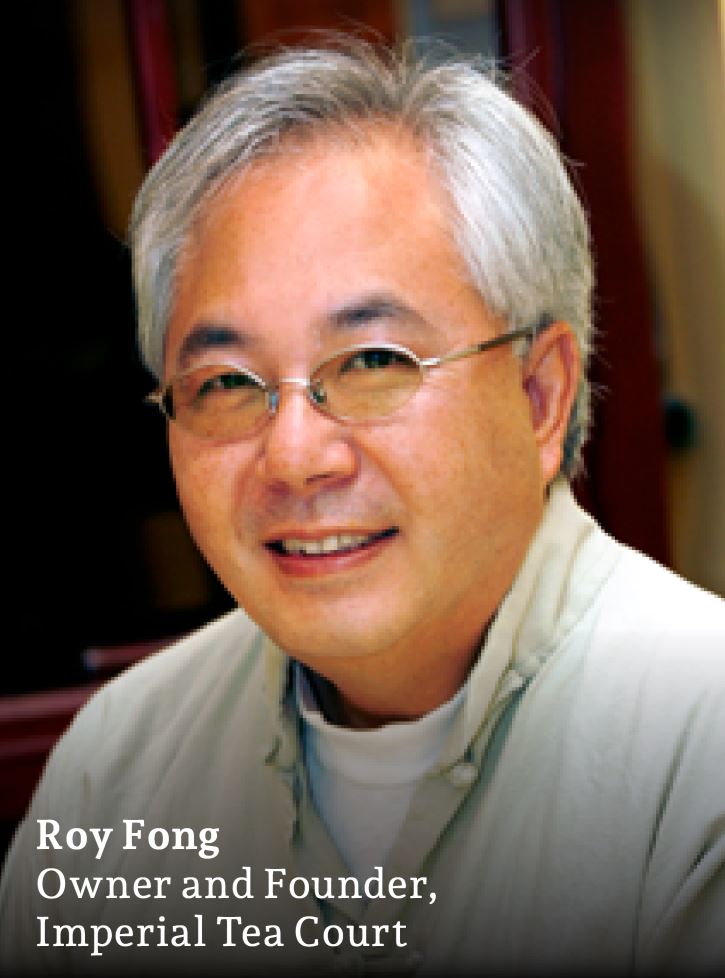
When you talk with Roy Fong, you cannot help but be inspired by his positive energy, entrepreneurial spirit, and optimistic outlook. As the founder of Imperial Tea Court in San Francisco, the first traditional Chinese teahouse in the United States, Roy has spent decades building successful ventures, pursuing new opportunities, and cultivating relationships rooted in trust.
One of those relationships is with Bank of Marin.
“From my experience, being successful in life and business is all about working well with people and learning who you can trust,” says Roy. “I’ve always appreciated working with people who are honest, responsive, and committed to finding solutions. That’s what I’ve experienced with Bank of Marin over the years.”
Roy’s journey to becoming what he affectionately calls a “crazy tea person” reads like a movie script.
At age 13, Roy and his family immigrated to San Francisco from Hong Kong. His early years in the Bay Area were spent learning English, attending school, and working hard at a variety of jobs. He delivered newspapers, worked in construction, and eventually became a mechanic before managing an auto towing and repair business.
Those experiences taught him the value of discipline, resilience, and hard work, lessons that would shape the rest of his life.
A trip back to Hong Kong at age 21 introduced Roy to what would become a lifelong passion. Drawn into a traditional tea shop by the aroma of oolong tea, he instantly fell in love with tea.
Back in San Francisco, Roy immersed himself in learning everything he could about tea. He began importing rare teas and supplying local dim sum restaurants before opening the first Imperial Tea Court location in Chinatown with his wife, Grace, on July 4, 1993.
“Given it was a big holiday and a day off for most people, I figured we would get some business, which we did,” Roy recalls. “But the next day we only had one customer who spent three dollars. It took a lot of time and perseverance to build our company into a thriving business.”
His commitment paid off. Over the years, Imperial Tea Court became a destination for tea enthusiasts throughout the Bay Area and beyond, introducing generations of customers to the traditions and artistry of fine Chinese tea.
Today, Roy and Grace no longer work around the clock as they once did, and the business has become a true family endeavor. One daughter manages the family’s Imperial Tea Court location in San Francisco’s Ferry Building, while the other helps lead the San Francisco International Tea Festival, founded by Imperial Tea Court in 2012. Together, they carry forward the vision, traditions, and entrepreneurial spirit that Roy and Grace have cultivated for more than three decades.
Looking back, Roy sees the business as more than a successful company. It’s a reflection of the life he and Grace have built together.
“We’ve lived the American dream,” Roy says. “Both of our daughters graduated from college and now have successful careers and own their own homes. We are so proud and grateful for all that we have.”
Throughout his career, Roy has embraced new opportunities. In addition to growing Imperial Tea Court and supporting his family’s continued involvement in the business, he has spent the past 15 years building a portfolio of Bay Area real estate investments.
Along the way, he developed a relationship with Bank of Marin’s commercial banking team, including Vice President and Relationship Manager Pat Collins in the Bank’s Oakland Commercial Banking Office.
“I greatly value a strong work ethic and attention to detail,” says Roy. “Pat stays engaged throughout the process, follows through on commitments, and makes sure things are handled efficiently and correctly. That level of accountability gives me confidence.”
For Roy, that experience reflects the broader relationship he has built with Bank of Marin through the years.
“When you’re evaluating opportunities and growing your investments, you need people you can count on,” he says. “That’s what I’ve found at Bank of Marin.”
Whether building a business, investing in real estate, or supporting the next generation of his family, Roy believes lasting success is built on trust.
“I am all about looking people in the eye and building trust,” Roy says. “Relationships are built over time through consistency and follow-through. Over the years, as I’ve pursued different opportunities and investments, Bank of Marin has been there when I’ve needed them, and that has made a difference.”
 Roy Fong
Owner and Founder, Imperial Tea Court
[email protected]
imperialtea.com